Clinical Case Summary
A male patient in his 20s was injured in the courtyard of a hospital in Kyiv during a Russian missile attack. He was found to have a comminuted pelvic fracture, penetrating abdominal shrapnel, junctional hemorrhage, and no palpable pulse following the blast injury. The AAJT-S achieved hemorrhage control, allowing the team to administer fluids and blood and stabilize the patient for transfer to a higher level of care.
Location: Kyiv, Ukraine
Authors: Dr. Yevheniia Poliakova
Setting: Hospital
Application site: Abdomen
Case ID: US-26-11
Synopsis
- AAJT-S applied to abdomen
- Non-invasive external aortic compression
- IV fluids and blood products administered
- Hemodynamics stabilized
- Transferred to trauma-capable facility
- Blast / Fragmentation Injury
- Comminuted pelvic fracture
- Penetrating abdominal shrapnel
- Junctional hemorrhage
- No palpable pulse on presentation
- BP 100/60 · HR 100 · SpO2 99%
- Hgb 78 g/L post-resuscitation
- Hemorrhage control achieved
- Survived to transfer
— Dr. Yevheniia Poliakova · Olexandrivska Hospital, Kyiv, Ukraine
In Zaporizhzhia, Ukraine, a multidisciplinary hospital located just 20 kilometers from the front line operates under the constant threat of short-range missile attacks. With only two to three minutes between launch and impact, there is little to no warning before strikes occur. Although the hospital primarily provides elective obstetric and gynecologic care—not trauma services—its staff must be prepared to respond when mass casualty incidents happen without notice.
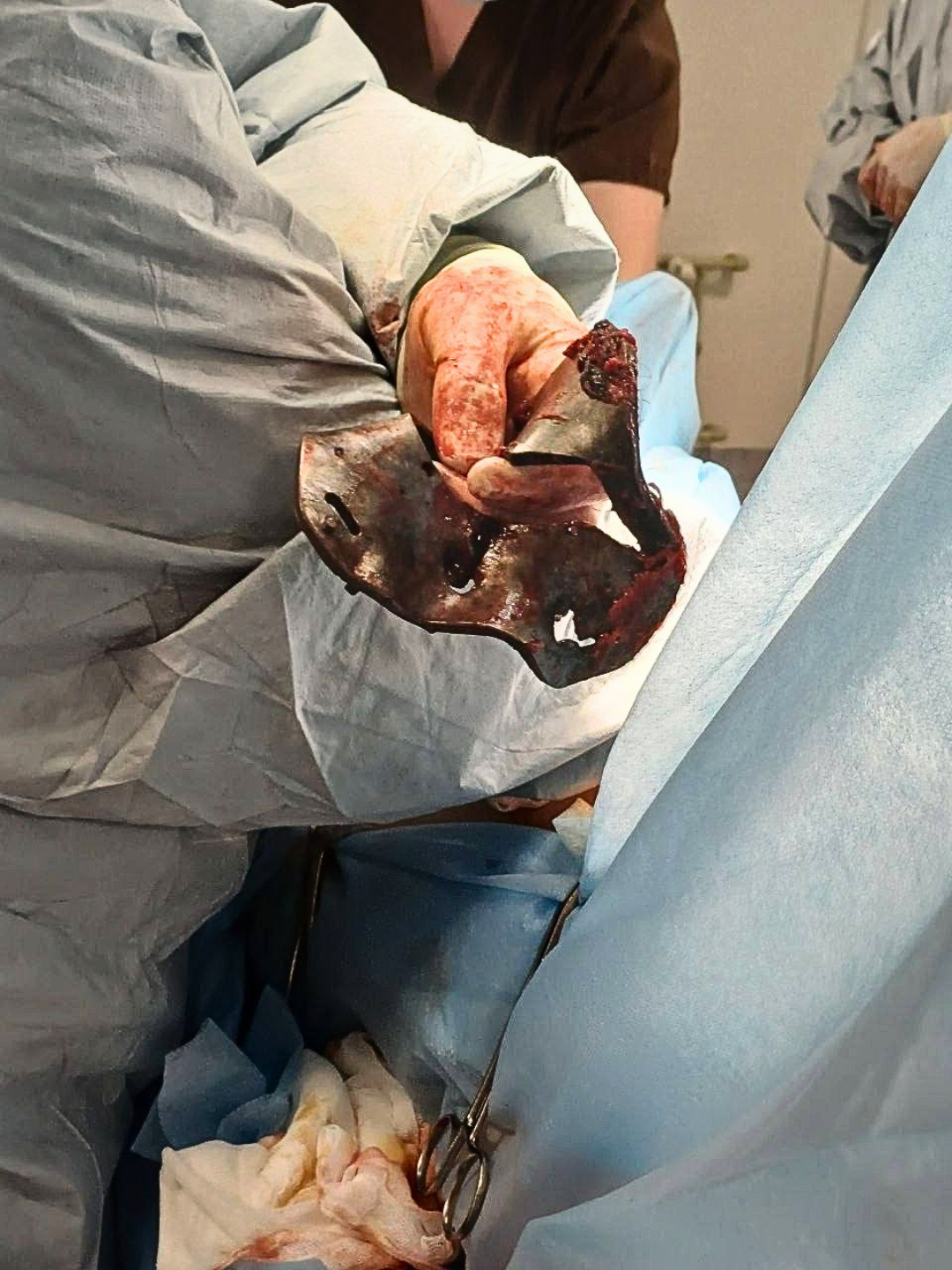
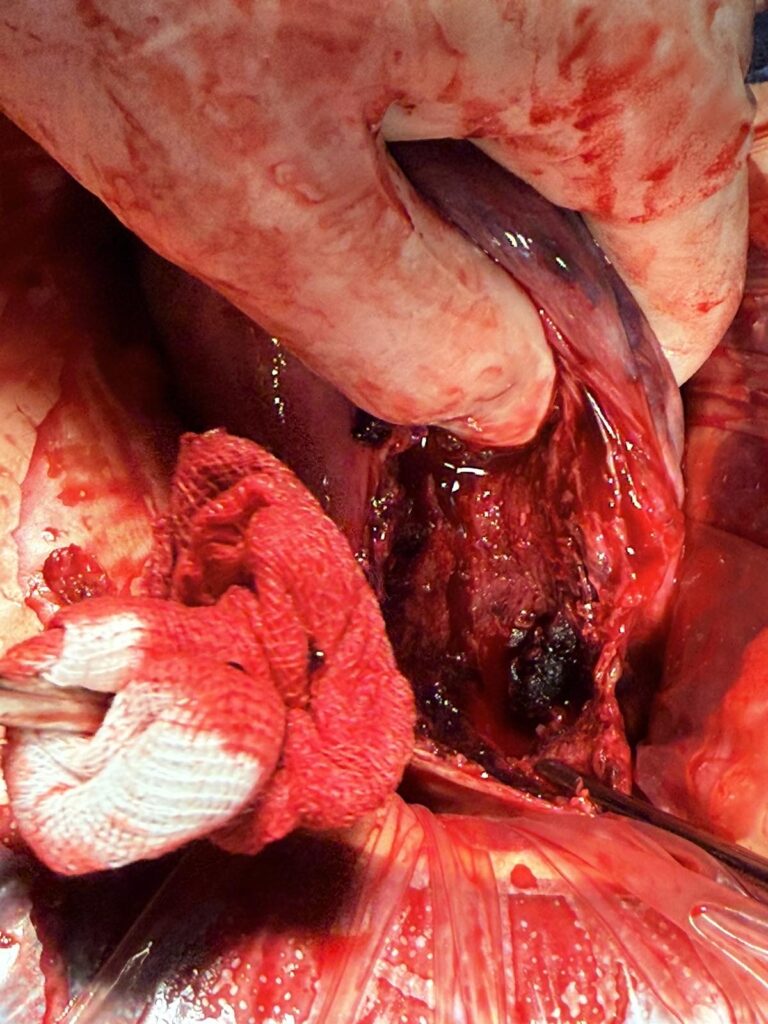
Following a missile strike that impacted the hospital’s rear courtyard, a rehabilitation patient sustained devastating blast and fragmentation injuries, including a comminuted pelvic fracture, a penetrating abdominal shrapnel wound, extensive soft-tissue destruction, and massive junctional hemorrhage. The patient had no palpable peripheral pulse, making immediate hemorrhage control the priority.
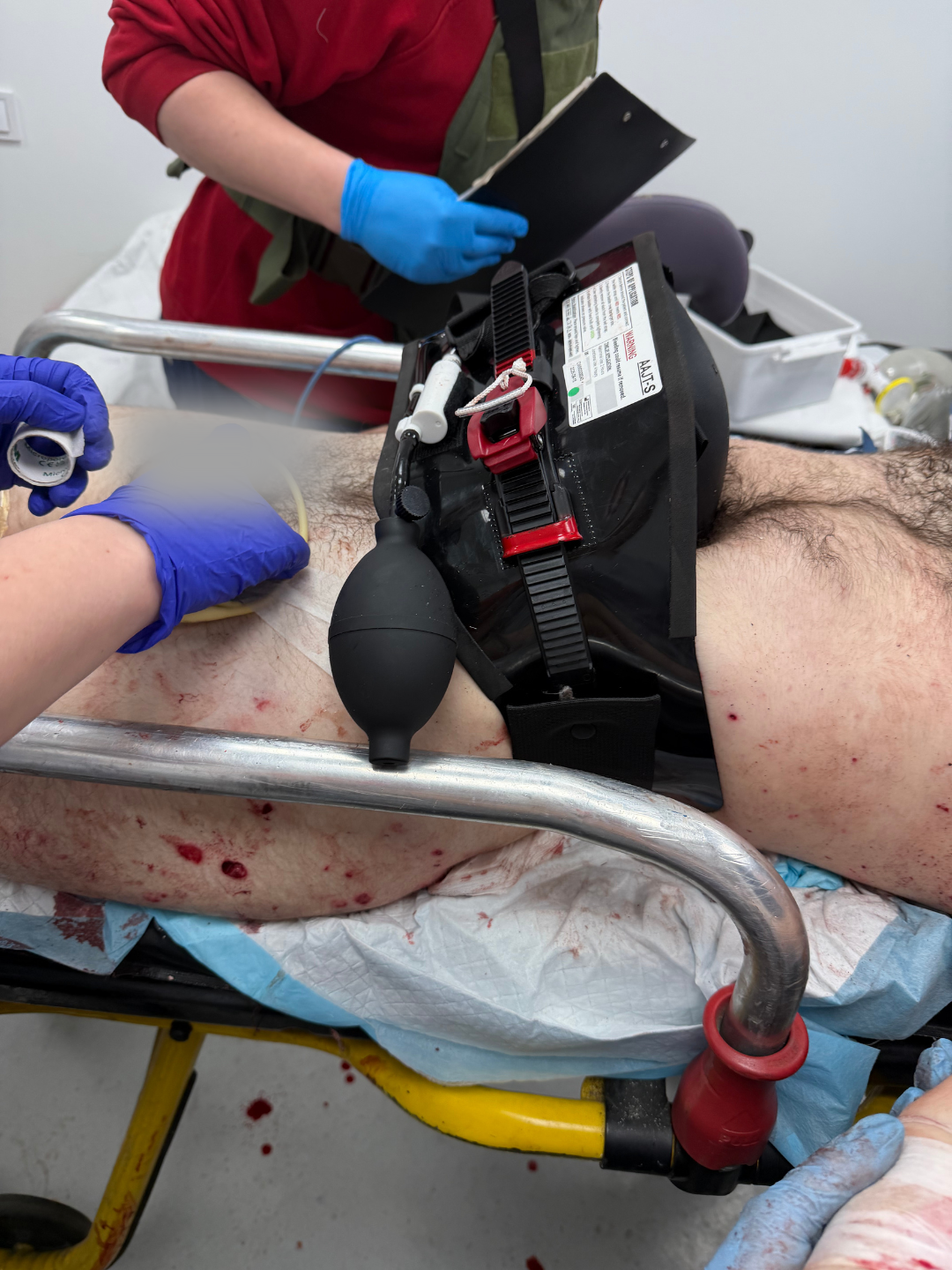
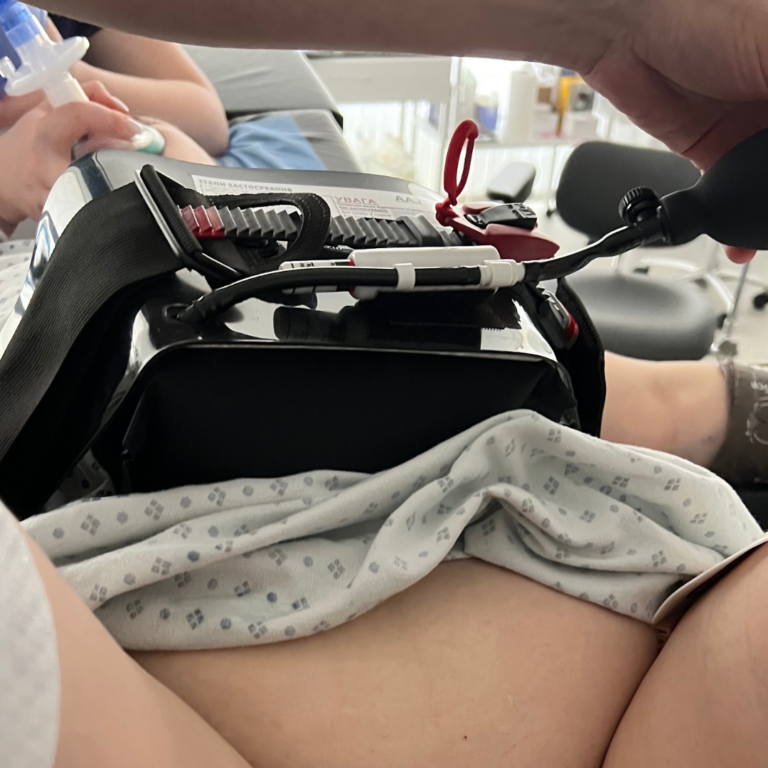
Hospital staff reached the casualty within moments and rapidly moved him inside. The AAJT-S® was applied to the abdomen immediately to control the life-threatening pelvic hemorrhage while the resuscitation team simultaneously established intravenous access, initiated massive fluid resuscitation, administered blood products and vasopressors, and secured the airway. The combination of hemorrhage control and aggressive resuscitation stabilized the patient sufficiently for evacuation to a regional multidisciplinary trauma center, where definitive surgical management could begin. After two additional days of stabilization, he was successfully transported to Kyiv for higher-level care.
This case underscored an operational reality familiar to military medics: definitive care is often hours away, and survival depends on bridging that gap. In this instance, the AAJT-S provided effective hemorrhage control that created the time needed to resuscitate the patient and made evacuation to progressively higher levels of care possible. As the treating physician later reflected, without effective hemorrhage control, the patient likely would not have survived long enough to leave the hospital courtyard.