Clinical Case Summary
A Level I trauma case in which the AAJT-S delivered external aortic compression to a patient in hemorrhagic shock — stabilizing the patient within minutes to allow imaging and definitive surgical care.
Location: Medical University of Graz, Austria
Care team: Trauma center · Medical University of Graz, Austria
Setting: Hospital · Level I trauma center
Application site: Abdomen
Case ID: US-26-10
Synopsis
- Traumatic Pelvic Fracture
- 3-story fall
- Hypotensive, tachycardic, deformed pelvis
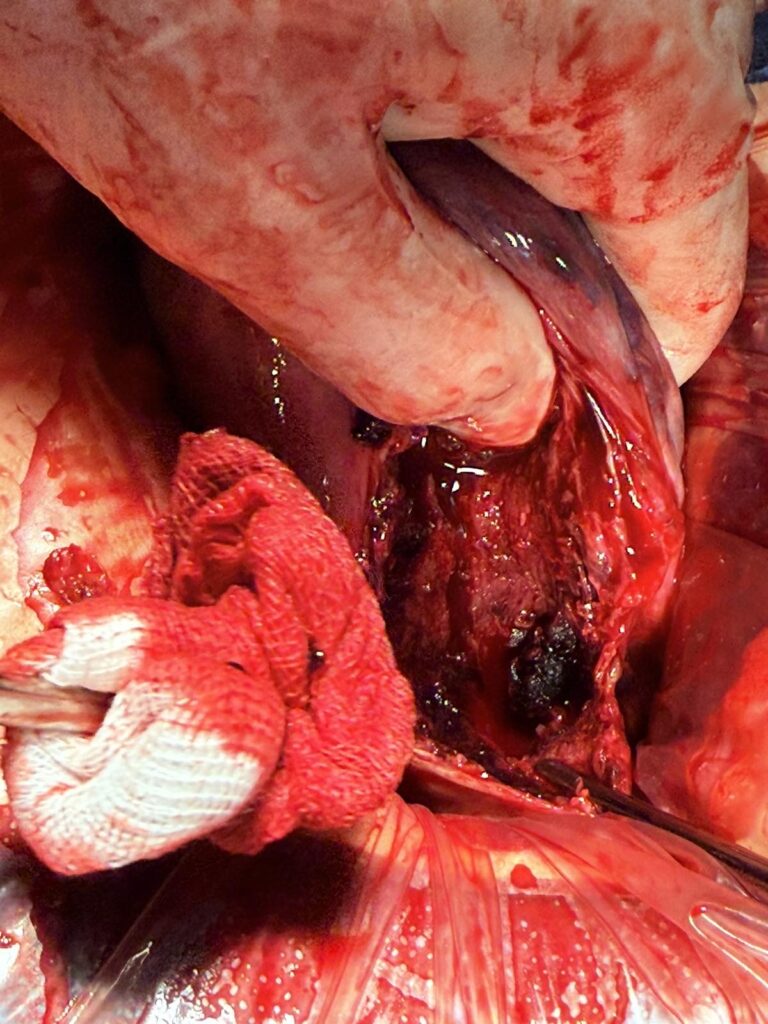
- Hemorrhagic shock from intrapelvic bleeding
- Pelvic binder placed by EMS
- Massive transfusion protocol & vasopressors initiated
- SBP remained in 70s despite intervention
- Patient arrives to trauma center in shock
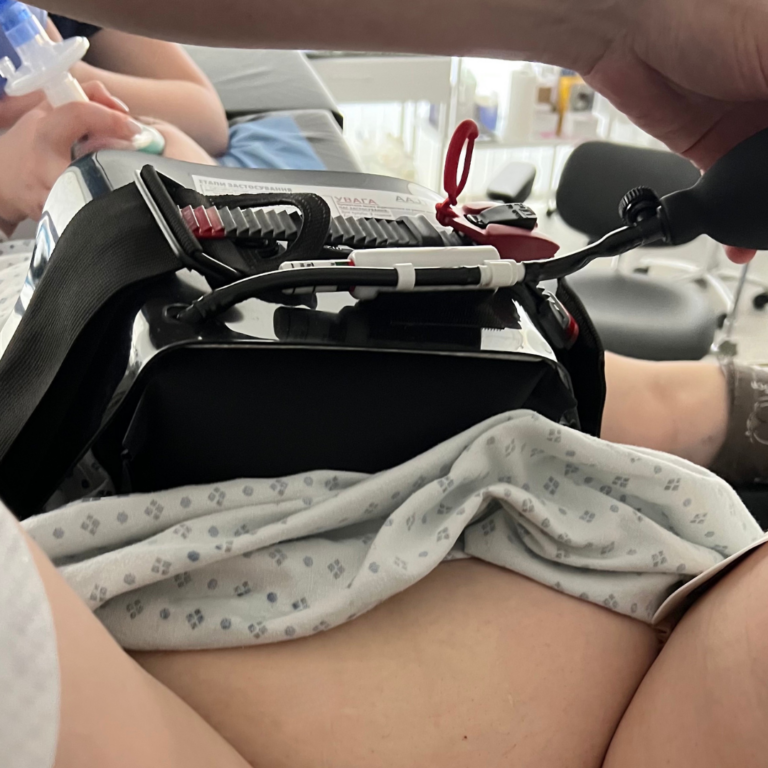
- AAJT-S applied to abdomen
- SBP rose >90mmHg
- Patient remained stable through imaging and damage control surgery
- No device-related complications or ischemia
- Discharged after 105 days in hospital
“The case illustrates the utility of the AAJT as a life-saving intervention in the primary management of unstable patients with non-compressible pelvic hemorrhage.”
— Trauma center · Medical University of Graz, Austria
A 27-year-old woman presented to the Medical University of Graz after sustaining catastrophic blunt pelvic trauma from a three-story fall. EMS applied a pelvic binder before transport, but upon arrival to the Level I trauma center she was in profound hemorrhagic shock, with a blood pressure of 70/30 mmHg and a heart rate of 148 beats per minute.
The trauma team immediately initiated a massive transfusion protocol (MTP), secured the airway, and began vasopressor support. Despite aggressive damage control resuscitation, the patient continued to deteriorate due to uncontrolled, non-compressible pelvic hemorrhage.
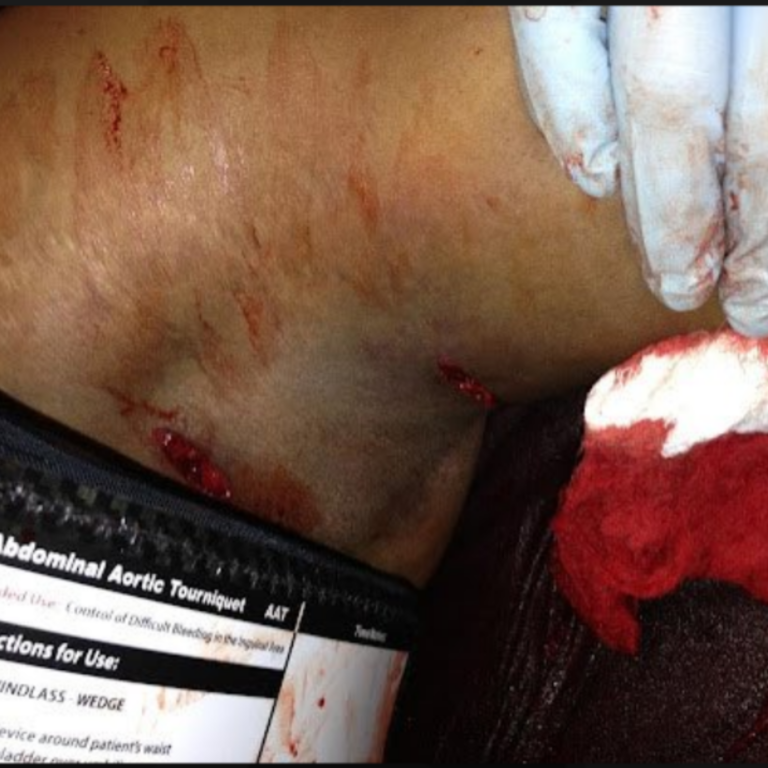
As a temporizing measure, clinicians applied the AAJT-S (Abdominal Aortic and Junctional Tourniquet) to externally compress the abdominal aorta and temporarily occlude blood flow. Within minutes, the patient’s systolic blood pressure increased from 70 to 90 mmHg, providing critical hemodynamic stabilization.
The temporary aortic compression achieved with the AAJT-S created a bridge to definitive hemorrhage control, allowing the patient to safely undergo CT imaging before proceeding to damage control surgery. The device remained in place for approximately 40 minutes during resuscitation.
Following definitive surgical management, recovery, and rehabilitation, the patient was discharged after 105 days in the hospital, neurologically intact.
Clinical Significance: This peer-reviewed case demonstrates how temporary aortic compression with the AAJT-S can serve as a rapid, noninvasive bridge to definitive hemorrhage control for patients with life-threatening pelvic hemorrhage and hemorrhagic shock when standard resuscitative measures alone are insufficient.
Published in the Scandinavian Journal of Trauma, Resuscitation and Emergency Medicine (2025)
Bleeding Control in Catastrophic Blunt Pelvic Trauma Using the Abdominal Aortic and Junctional Tourniquet in a Civilian Level I Trauma Center: A Case Report
Gabriel Honnef, Daniel Freidorfer, Paul Puchwein, Jakob Steiner & Philipp Zoidl
Link to Full Case Report: https://link.springer.com/article/10.1186/s13049-025-01517-w