Clinical Case Series Summary
An open-label, prospective case series of four patients with refractory postpartum hemorrhage in which the AAJT-S applied in 90 seconds to the abdomen achieved full cessation of bleeding in every case, with no device-related complications.
Study: Open-label, prospective case series · Ukraine Poliakova Y, Oshovskyy V. Temporary aortic occlusion with the abdominal tourniquet for refractory postpartum hemorrhage: A proof-of-concept study in a war-affected region. Int J Gynaecol Obstet. 2026 Jan;172(1):582–587. doi: 10.1002/ijgo.70395
Investigators: Hospital obstetrics · Open-label prospective PPH series
Setting: Hospital · Obstetrics
Application site: Abdomen
Case ID: PCD-26-03
Synopsis
- Postpartum Hemorrhage
- 4 women with primary PPH (>1,000 mL blood loss)
- Refractory to standard measures
- Risk of life-threatening blood loss
- AAJT-S applied to abdomen. Inflated to 250 mmHg
- External aortic compression acheived
- Bleeding controlled in all cases within 2 minutes of inflation
- Device maintained for mean 38.8 min (range 30–45 min)
- Bridge to definitive management
- 100% bleeding controlled in all 4 patients (4/4)
- 3 of 4 patients required surgical intervention after deflation
- 1 of 4 bleeding ceased spontaneously after deflation
- No device-related complications, thrombotic events, infections, or ischemic injuries
- All patients managed successfully
“Unfortunately, neither Jada nor the Bakri balloon can provide a 100% guarantee of bleeding cessation. And if bleeding does not stop with these methods, this is when the situation becomes truly critical: by that point, the woman has usually already lost more than a liter of blood, starts to show hemodynamic instability, and must be transported to the operating room for surgical intervention.
Here lies the main advantage of the AAJT-S. From our experience, once applied, the AAJT-S provides 100% control of bleeding during the period it remains in place. While we do not expect the device to “cure” the bleeding, it reliably buys us the critical time we need: transporting the patient, preparing blood products, ensuring proper anesthesia, and assembling the surgical team. It allows us to know with confidence that while the device is applied, the patient will not bleed out.
Another important advantage of the AAJT-S is in cases of postpartum hemorrhage following cesarean delivery, particularly with preterm pregnancies. In such cases, the cervix is closed, and placement of the Jada or Bakri Baloon is technically impossible – but the AAJT-S does not present this limitation.”
— Dr. Yevheniia Poliakova, PhD, MD · Ukraine
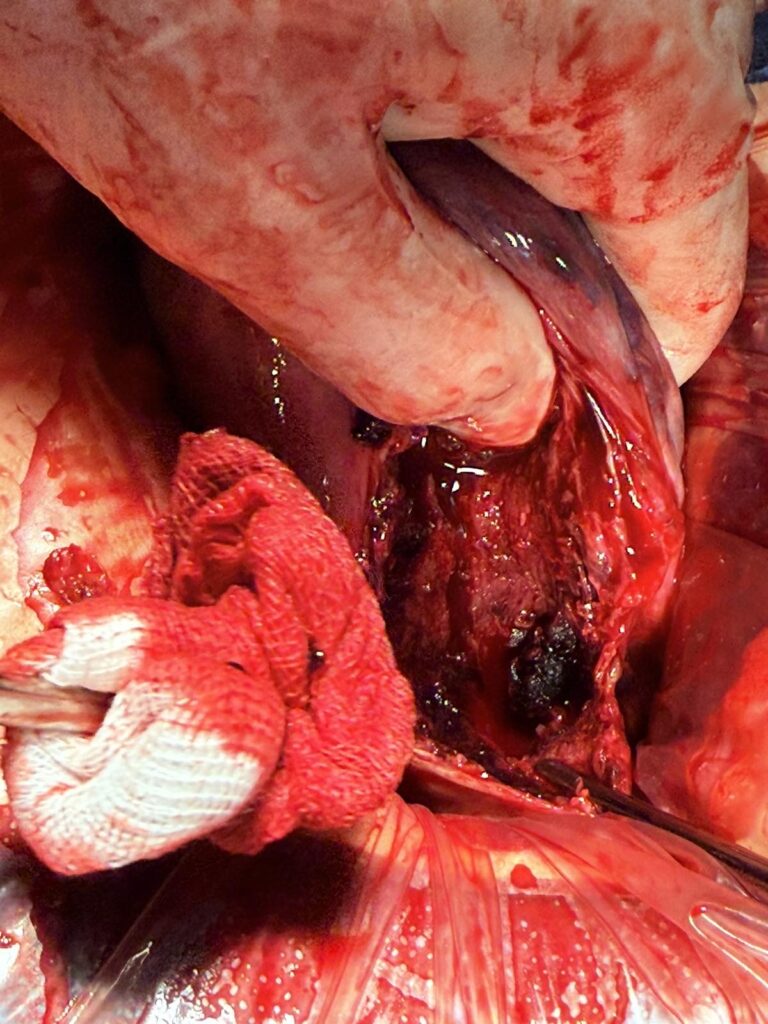
Postpartum hemorrhage (PPH) remains one of the leading causes of maternal mortality worldwide. This prospective case series evaluated the use of the AAJT-S (Abdominal Aortic and Junctional Tourniquet) as a temporary aortic occlusion device in four adult women with primary postpartum hemorrhage who continued to bleed despite standard treatment, including uterotonic medications and intrauterine balloon tamponade.
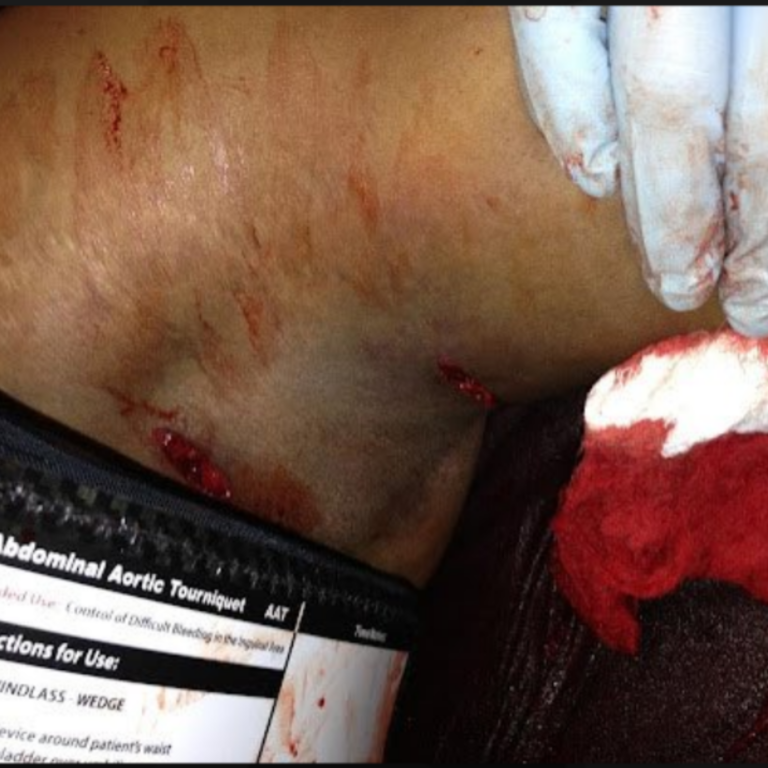
In each case, ongoing hemorrhage placed the patient at immediate risk of hemodynamic deterioration and created an urgent need for definitive surgical intervention. The clinical team applied the AAJT-S to the abdomen and inflated the device to 250 mmHg, achieving temporary external compression of the abdominal aorta.
Bleeding was controlled within two minutes of tourniquet inflation in all four patients. The rapid hemorrhage control provided a critical bridge to definitive care, allowing time to mobilize the surgical team, prepare the operating theater, administer anesthesia, and deliver blood products. The device remained in place for a mean of 38.8 minutes (range 30–45 minutes).
Following planned deflation, bleeding resumed in three patients, who immediately proceeded to definitive surgical intervention. In the fourth patient, bleeding did not recur after release of the aortic compression, and no additional surgical procedure was required.
Across all four cases, no device-related complications, thrombotic events, infections, or ischemic injuries were reported.
Clinical Significance: This prospective case series demonstrates that the AAJT-S can provide rapid, temporary aortic occlusion for refractory postpartum hemorrhage when first-line therapies fail. By controlling external bleeding within minutes, the device served as a bridge to definitive hemorrhage control — giving clinicians valuable time to organize surgical resources, initiate transfusion, and continue resuscitation. These findings support the potential role of the AAJT-S as a noninvasive option in the management of severe postpartum hemorrhage requiring escalation beyond standard obstetric interventions.
Published in the International Journal of Gynecology & Obstetrics (2026)
Temporary aortic occlusion with the abdominal tourniquet for refractory postpartum hemorrhage: A proof-of-concept study in a war-affected region
Poliakova Y, Oshovskyy V. Int J Gynaecol Obstet. 2026 Jan;172(1):582–587. doi: 10.1002/ijgo.70395
Link to Full Case Report: https://pubmed.ncbi.nlm.nih.gov/40679120/