Clinical Case Summary
A 40 y/o female patient was stabilized with the AAJT-S during a hemorrhagic crisis, enabling definitive surgical repair.
Location: Ukraine
Clinician: Dr. Yevheniia Poliakova, PhD, MD
Setting: Hospital
Application site: Abdomen
Case ID: US-26-09
Synopsis
- Massive Vaginal Hemorrhage
- Endometrial Polypectomy
- Presented with vaginal bleeding
- Sudden massive vaginal bleeding (2L blood loss) while patient was awaiting MRI
- Hgb dropped 12.8 → 7.1 g/dL
- AAJT-S Applied to Abdomen
- Hemorrhage immediately controlled
- Transported to OR
- Definitive surgical repair performed
- Hysterectomy completed
- No ischemic events
- Patient discharged stable
“I simply wanted to thank you and let you know that your tourniquet truly saves lives.”
— Dr. Yevheniia Poliakova, PhD, MD · Ukraine
A 40 y/o woman presented to the hospital with pelvic pain approximately one week after undergoing an outpatient endometrial polypectomy. Ultrasound findings were concerning for a uterine arteriovenous malformation (AVM). Because she showed no signs of active bleeding or vaginal spotting, she was admitted for observation while awaiting MRI confirmation of the diagnosis.
During her hospitalization, the patient’s condition changed dramatically. She developed sudden, massive vaginal hemorrhage with rapid hemodynamic deterioration. Within minutes, she lost an estimated 2 liters of blood, became unconscious, and her hemoglobin of 12.8 g/dL with a drop to 7.1 g/dL. The speed and severity of the hemorrhage left clinicians with only a brief window to control the bleeding before irreversible shock.
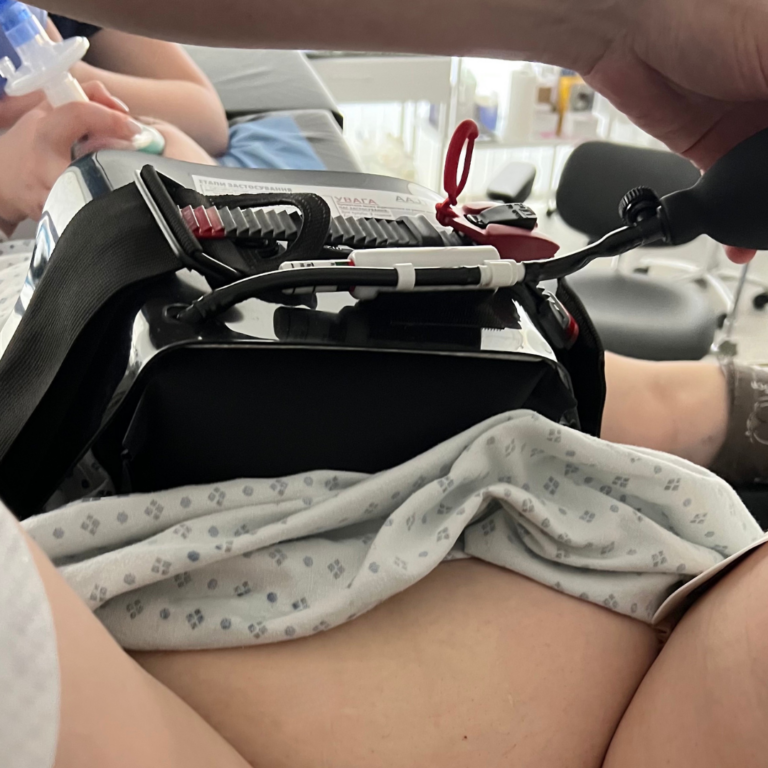
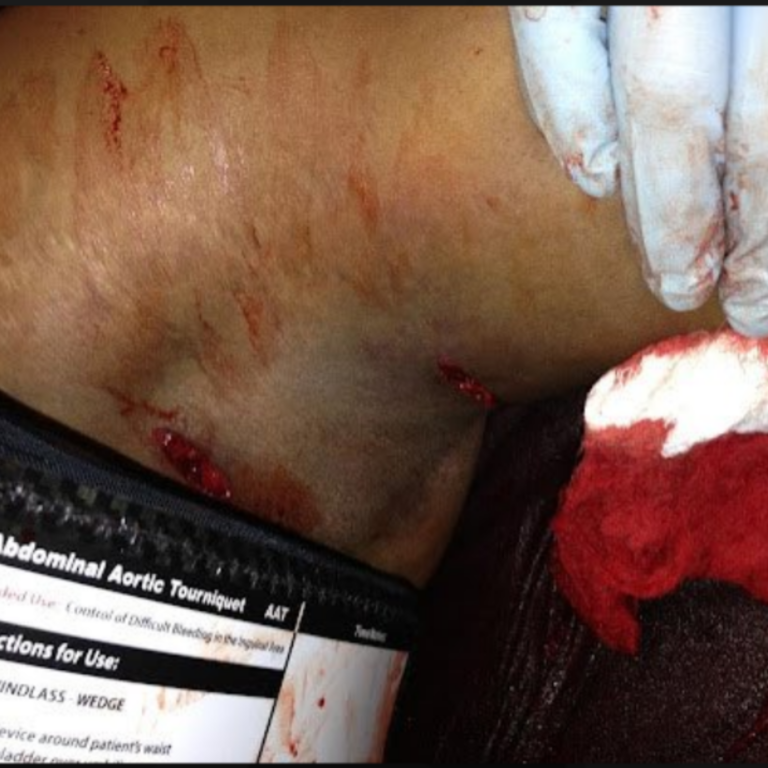
The AAJT-S was immediately applied to the patient’s abdomen, providing external aortic compression to rapidly control pelvic hemorrhage. Once hemorrhage control was achieved, fluid resuscitation was initiated, and the patient regained consciousness. She was successfully stabilized and transported to the operating room for definitive surgical management.
The hemorrhage control provided by the AAJT-S created the critical time needed to resuscitate the patient and safely transfer her for surgery. The only reported adverse event associated with AAJT-S use was vomiting after the patient regained consciousness.
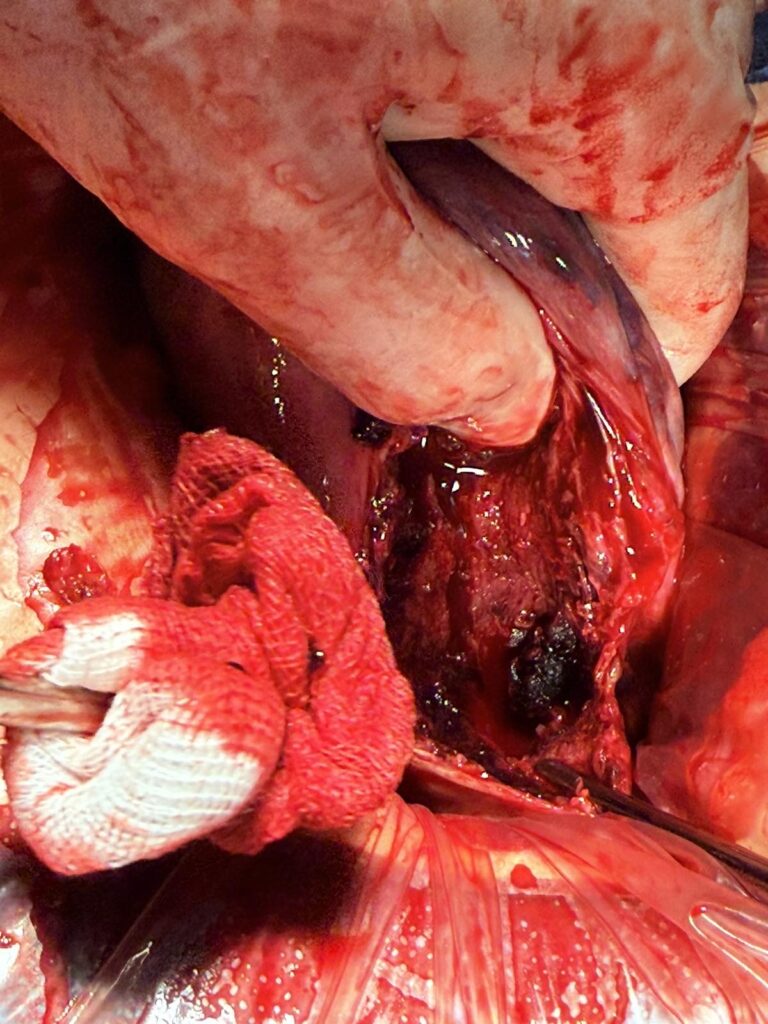
Although surgeons attempted to preserve the uterus, the tissue was found to be extremely friable, and persistent bleeding made uterine salvage impossible. A hysterectomy was performed to achieve definitive hemorrhage control. The patient recovered from surgery and was discharged home in stable condition.
Clinical Impact: This case demonstrates the potential role of external aortic compression as a bridge to definitive treatment in catastrophic pelvic hemorrhage. By rapidly controlling blood loss and restoring central perfusion, the AAJT-S provided clinicians with valuable time to stabilize the patient before emergency surgery.
Poliakova Y, Oshovskyy V. Innovative application of an aortic tourniquet for temporary control of massive hemorrhage due to uterine arteriovenous malformation in a resource-limited, war-affected setting:
— A case report. Int J Gynecol Obstet. 2026;00:1-3. doi:10.1002/ijgo.71254