Clinical Case Summary
Birmingham, Alabama — first documented use of a junctional tourniquet for upper-extremity hemorrhage control in a critically unstable trauma patient.
Location: Birmingham, Alabama
Clinicians: Croushorn, McLester, Thomas, McCord
Setting: Hospital
Application site: Axilla
Synopsis
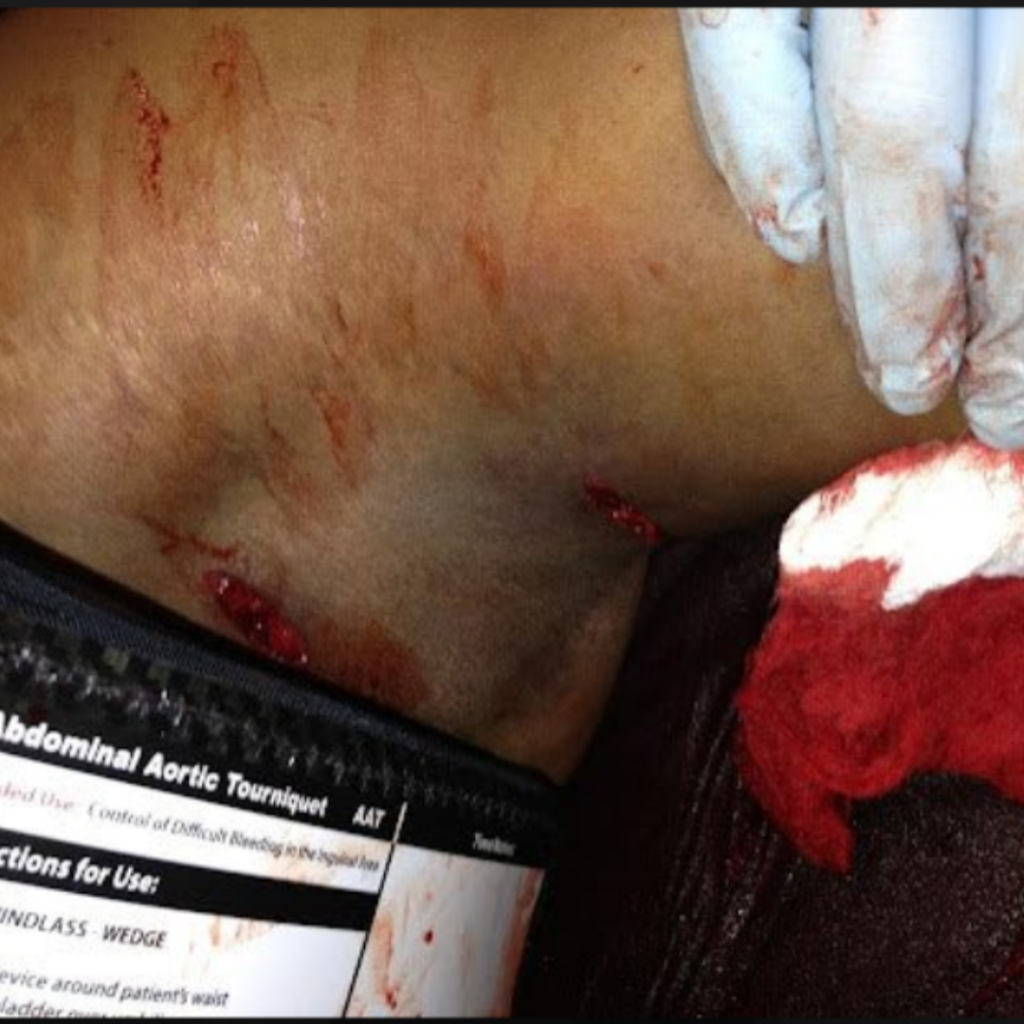
- GSW Left Axilla Entering L Chest
- Dropped at ER doors, unconscious
- HR 130, BP undetectable, weak & thready pulse
- Class IV Shock
- 6 cm of brachial artery destroyed
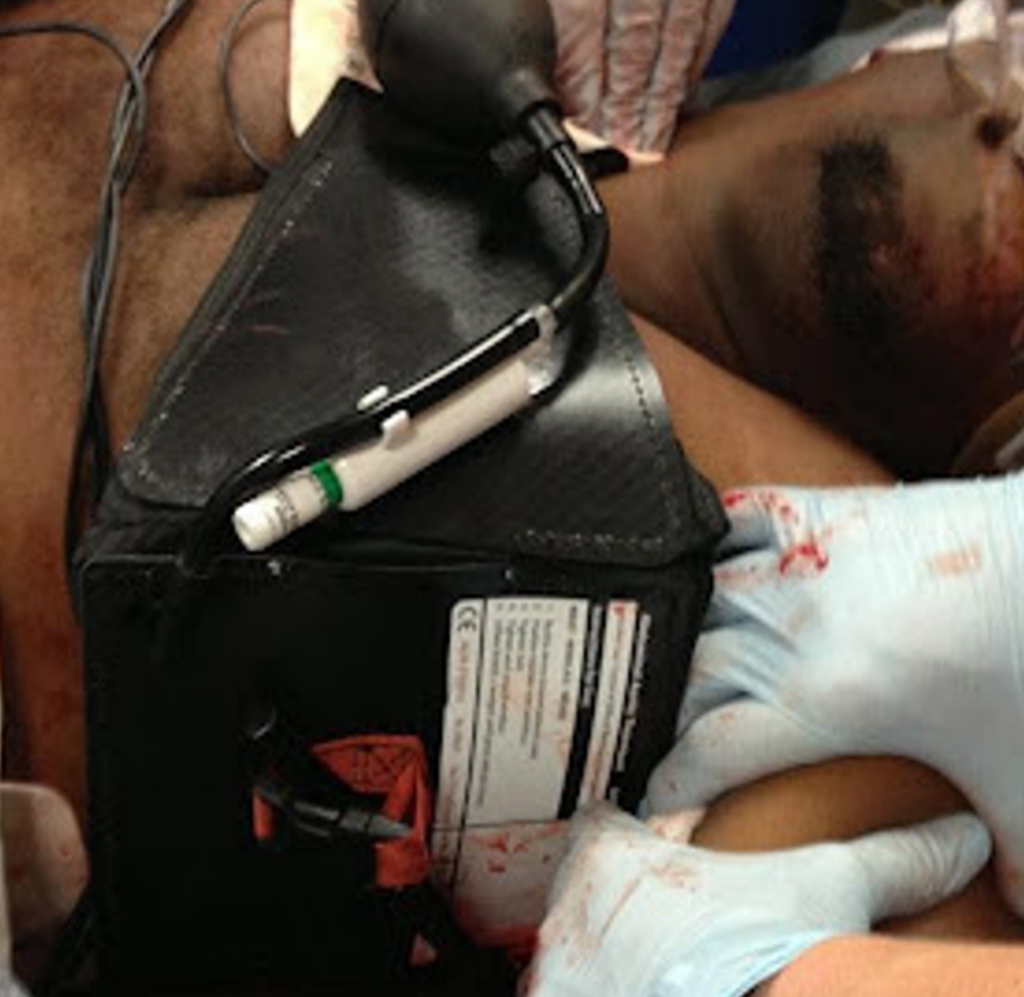
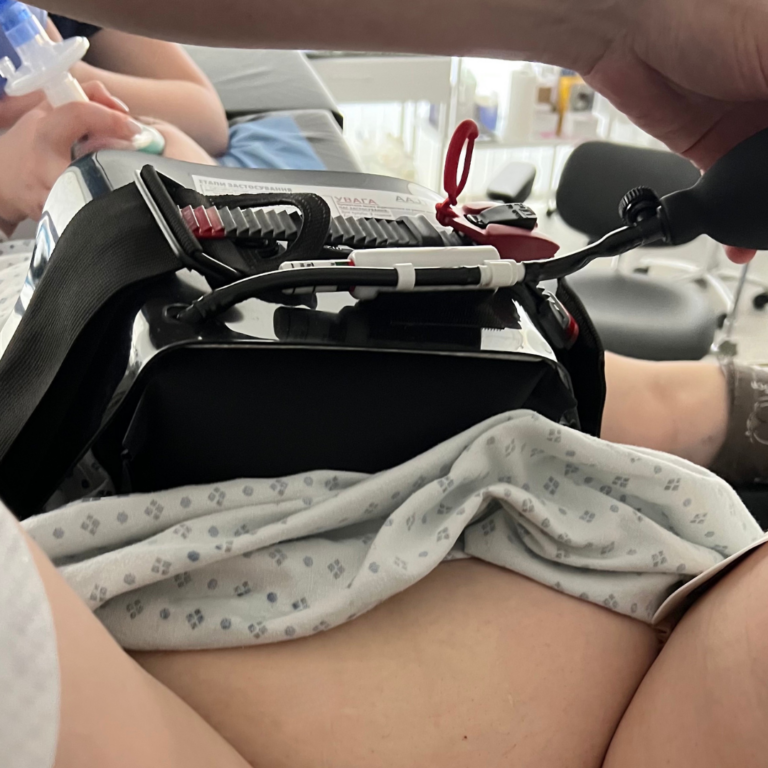
- AAJT-S applied to axilla
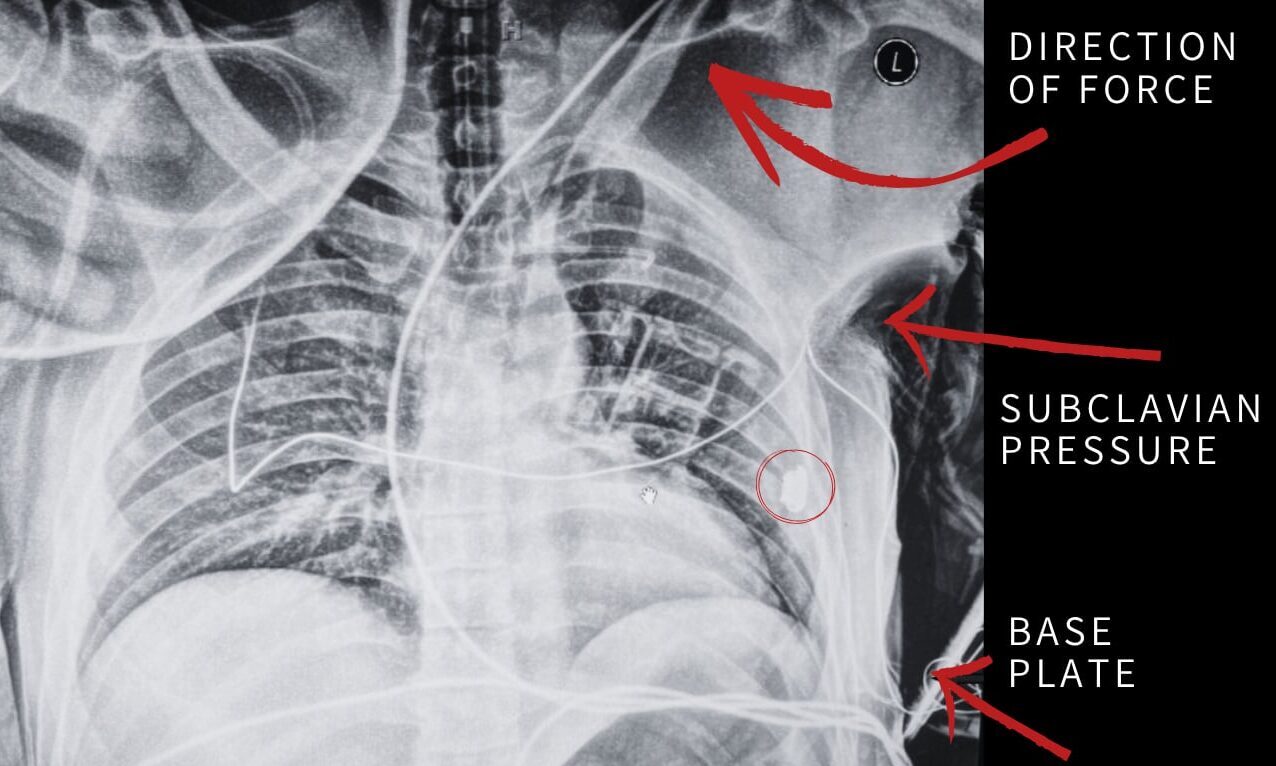
- Subclavian artery compressed at mid-clavicle
- Hemorrhage immediately controlled
- 1 unit O+ whole blood administered
- TXA and calcium administered
- Transferred to OR for vascular repair
- Vascular repair performed
- SBP restored and stabilized
- No necrosis or nerve damage
- No device-related complications
- Patient discharged in 3 days
Abdominal Aortic Tourniquet Controls Junctional Hemorrhage From a Gunshot Wound of the Axilla — the first reported use of a junctional tourniquet for upper-extremity hemorrhage control.
Croushorn, McLester, Thomas, McCord · Published Case Report (PubMed)
This case represents the first documented human use of a junctional tourniquet to control upper extremity junctional hemorrhage, demonstrating the ability of the Abdominal Aortic and Junctional Tourniquet – Stabilized (AAJT-S) to provide temporary hemorrhage control in a patient with otherwise unsurvivable bleeding.
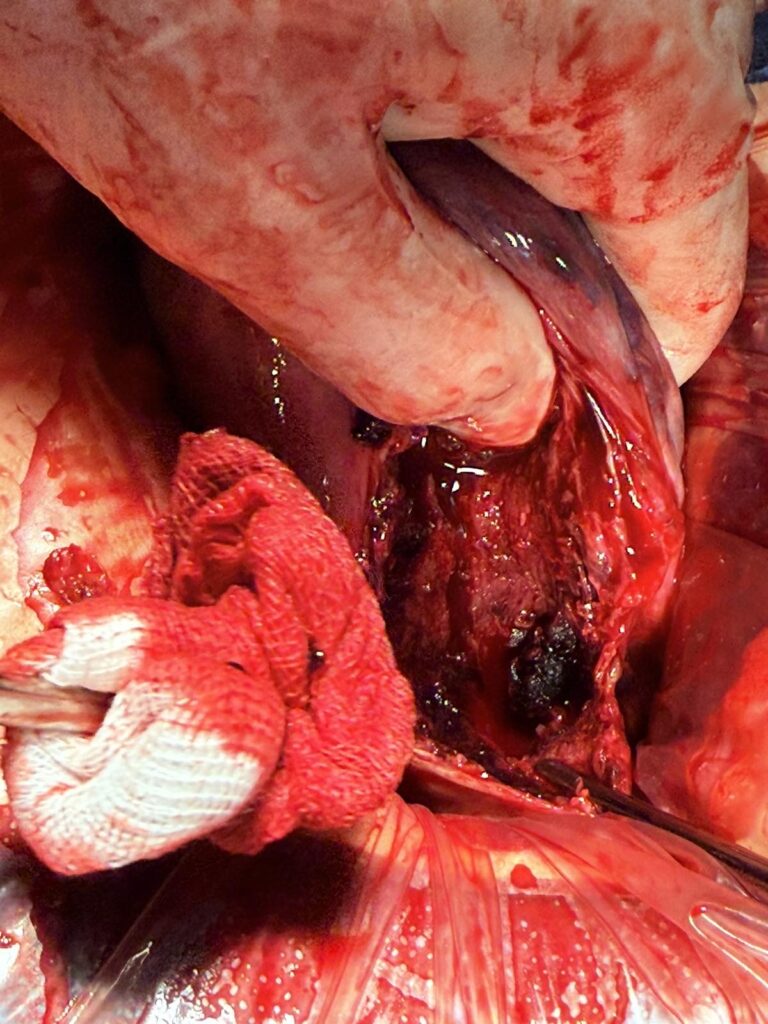
A 41-year-old male was brought to the emergency department after sustaining a single gunshot wound (GSW) to the left axilla (armpit). The projectile traversed the axilla, entered the left chest, and destroyed approximately 6 cm of the brachial artery, resulting in catastrophic hemorrhage. The patient was dropped off at the emergency department by bystanders. On arrival, he was unconscious, in Class IV hemorrhagic shock, with a thready pulse, no measurable blood pressure, and a heart rate of approximately 130 bpm.
The receiving trauma team immediately applied the AAJT-S at the left axilla. The device’s inflatable bladder created directed pressure across the upper chest, compressing the subclavian artery against the clavicle near the mid-clavicular line, producing immediate hemorrhage control and restoring the opportunity for resuscitation.
With bleeding controlled, the team initiated aggressive resuscitation using whole blood, along with tranexamic acid (TXA) and intravenous calcium. After hemodynamic stabilization, the patient was transported to the operating room for definitive vascular repair.
During surgery, vascular surgeons confirmed approximately 6 cm of brachial artery destruction and successfully repaired the injury. The patient survived with preservation of the injured extremity, maintained stable systolic blood pressure throughout the perioperative period, and experienced no distal limb ischemia, tissue necrosis, or nerve injury attributable to the junctional compression device. He was discharged from the hospital three days later without device-related complications.
Clinical Impact: This landmark case demonstrated that rapid application of the AAJT-S can provide effective temporary control of otherwise non-compressible upper extremity junctional hemorrhage, buying critical time for resuscitation and definitive surgical repair. It established proof of concept for junctional hemorrhage control in the axillary region and helped support the development of modern junctional tourniquet strategies in both military and civilian trauma care.