Clinical Case Summary
A 21-year-old male in Afghanistan with three GSWs, hemorrhagic shock, and a transected left deep femoral artery survived after the AAJT-S was applied to the left inguinal crease — filling the capability gap a limb tourniquet cannot reach.
Location: Afghanistan
Authors: Croushorn J
Setting: Military · Tactical
Application site: Left inguinal crease
Case ID: – US-26-04
Synopsis
- 3x GSW to Leg and Groin
- Lethargic & confused on assessment
- Hemorrhagic shock
- Transected left deep femoral artery
- Junctional zone — no extremity TQ option
- Extremity TQ applied (injury was too high)
- AAJT-S applied to Left Inguinal Crease
- 4 units O+ PRBCs administered
- Hemorrhage control achieved at POI
- Stabilized for evacuation
- Vascular repair completed
- No device-related complications
- Discharged post-op day 1
“AAJT-S fills the capability gap for junctional hemorrhage that limb tourniquets cannot reach.”
A 21-year-old male in Afghanistan sustained three gunshot wounds (GSWs) to the left leg and groin, resulting in life-threatening hemorrhagic shock from a transected left deep femoral artery.
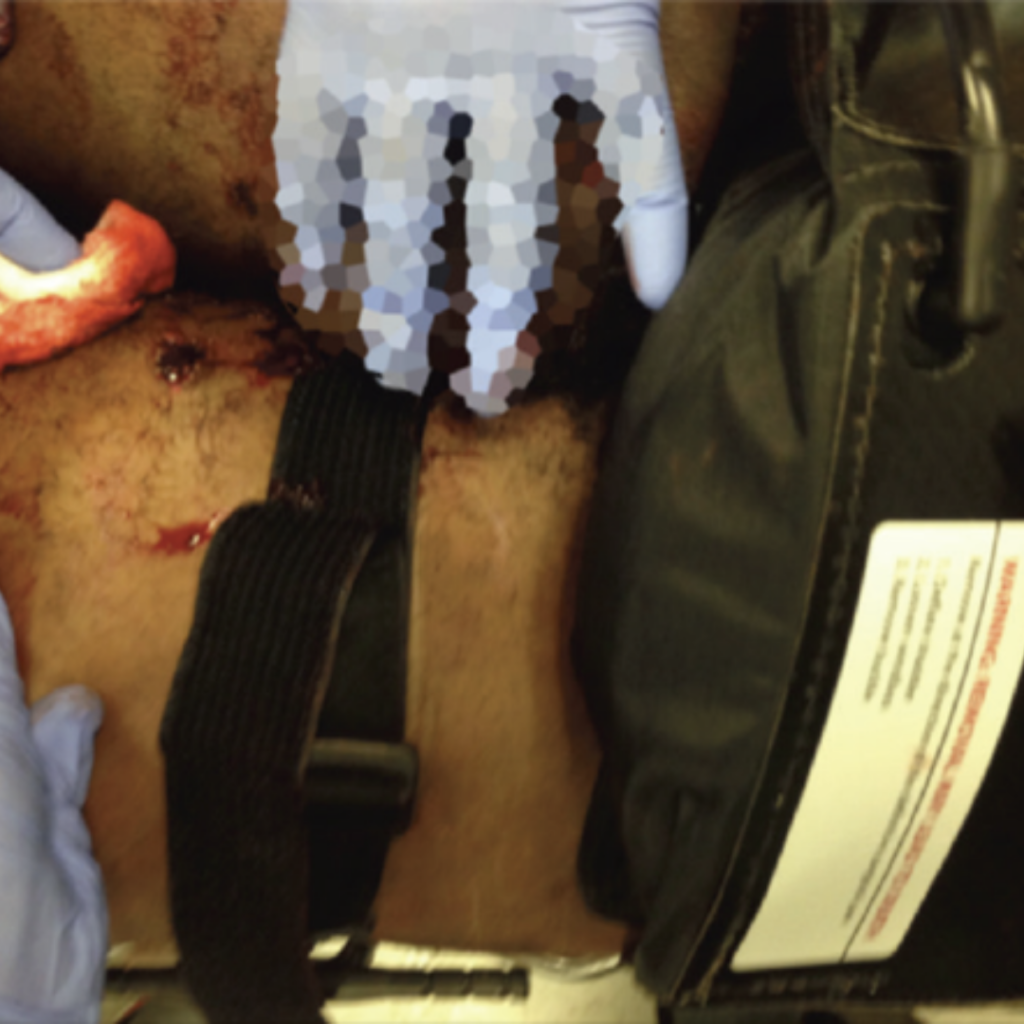
The patient was lethargic and confused, presenting with clinical signs consistent with severe blood loss. Two of the wounds were in the right lower extremity and were not actively bleeding. The primary source of hemorrhage was a proximal left thigh injury with a small entry wound and large exit wound with significant ongoing bleeding.
An extremity tourniquet was first applied to the left lower extremity in an attempt to control hemorrhage from the suspected distal component of the injury. However, due to the proximal location of the vascular injury within the inguinal/junctional zone, complete hemorrhage control could not be achieved with limb tourniquet application alone. This region represents the anatomical transition between the abdomen and thigh where standard extremity tourniquets cannot reliably occlude proximal femoral or iliac inflow.
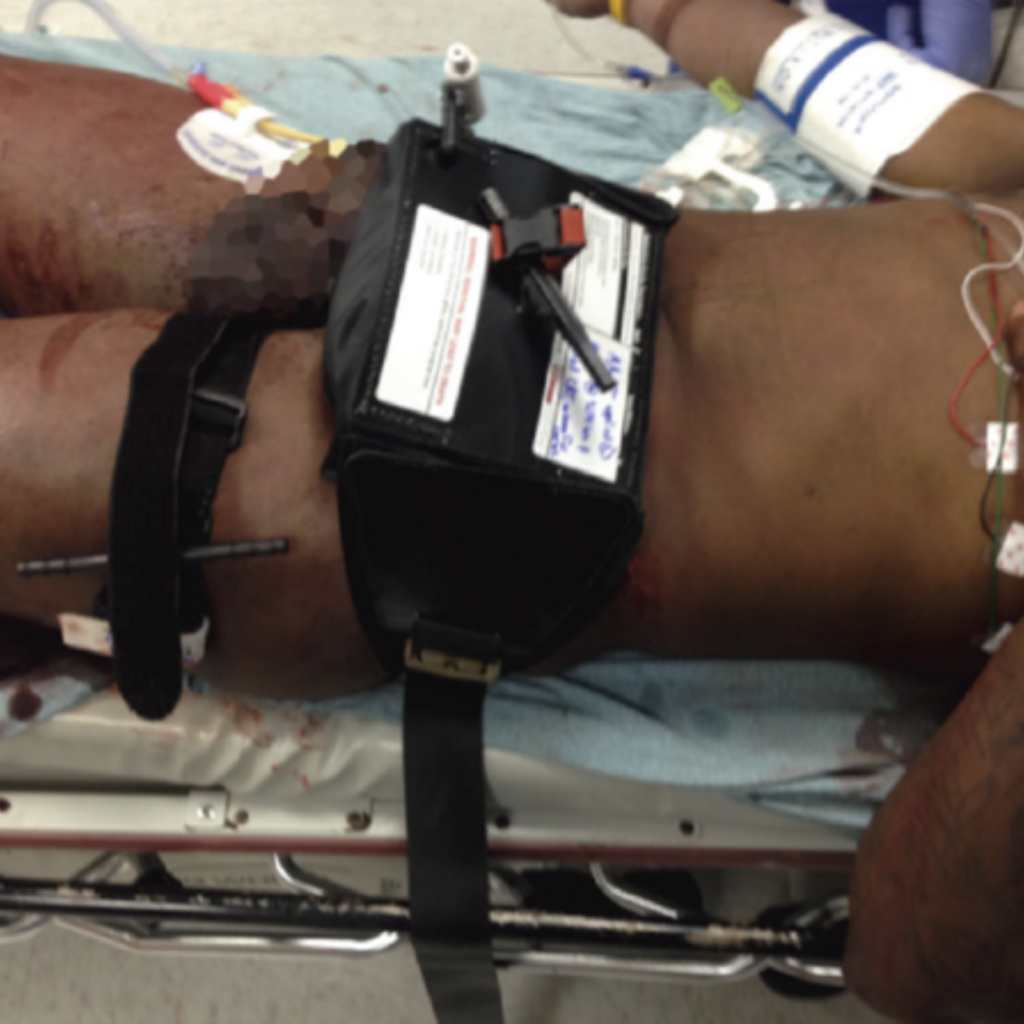
Given persistent hemorrhage and injury location, the AAJT-S® was applied to the left inguinal crease to provide targeted compression of the femoral and inguinal vascular structures. Application immediately achieved hemorrhage control by addressing the junctional bleeding source beyond the reach of the extremity tourniquet. The patient received four units of O-positive packed red blood cells as part of ongoing resuscitation.
Following AAJT-S application and transfusion, hemorrhage was controlled and hemodynamics stabilized, allowing for successful transfer to a Level 1 trauma center for definitive care.
Imaging and surgical evaluation confirmed a transected left deep femoral artery, and vascular repair was performed. The patient recovered without complication and was discharged home ambulatory on postoperative day three.
Clinical Significance: This case highlights the importance of recognizing junctional hemorrhage as a distinct challenge in trauma care where extremity tourniquets may be insufficient. The AAJT-S® provided effective proximal vascular control in the inguinal region, addressing a known capability gap in hemorrhage management — stabilizing a patient in hemorrhagic shock and enabling definitive surgical repair with full functional recovery.